Ventilation

  • 20 June, 2025
  • Leestijd: 4 min.

Why ventilating your home in winter is even more important
Windows, doors and vents closed. That sounds like winter! When it’s outside
When the weather is cold and gray, we prefer to keep it as warm as possible inside.
It makes sense, but it’s not a good idea for your health.
Ventilation is important. Especially in winter. We explain
Why.

With a blanket on the couch, close to the stove. In the winter we find nothing
nicer. Nice and warm, but unfortunately not healthy if you don’t ventilate enough.
Without realizing it, you produce all kinds of waste products in your home. Yes, even
if you open the windows every day. The result: a dirty and damp
environment.


Unhealthy indoor climate in the home
Every home has an indoor climate, in other words: the air in your home. By not or hardly ventilating, the air in your home will eventually contain a lot of moisture, carbon monoxide and other harmful substances. Common causes of this are smoking and cooking, but also washing, showering and sweating. Breathing yourself ensures
already for litres of water vapour per day in the house. And do you have a dog or cat? Then the humidity level in your house is often even higher.

Increased risk of flu and viruses
A dirty and damp house is the ideal breeding ground for mold. That is anything but good for your health, because it can give you headaches, sleep problems, allergies and respiratory problems. In the winter, viruses are also added that can more easily linger in your house. By not ventilating, the chance of a cold, flu or even the corona virus is also greater.

How to ventilate your home in a healthy way: 5 tips
Do you want to prevent the risk of health problems? Replace the polluted and humid indoor air with fresh outdoor air. So ventilate! These five tips will help you:

  • Tip 1: Do not confuse ventilation with airing
    Ventilating is really something different than airing your house. Opening a window or door makes little difference. As soon as you close the window again, the
    flow of healthy air. Ventilation is a continuous process.
  • Tip 2: Pay attention to the temperature in the house
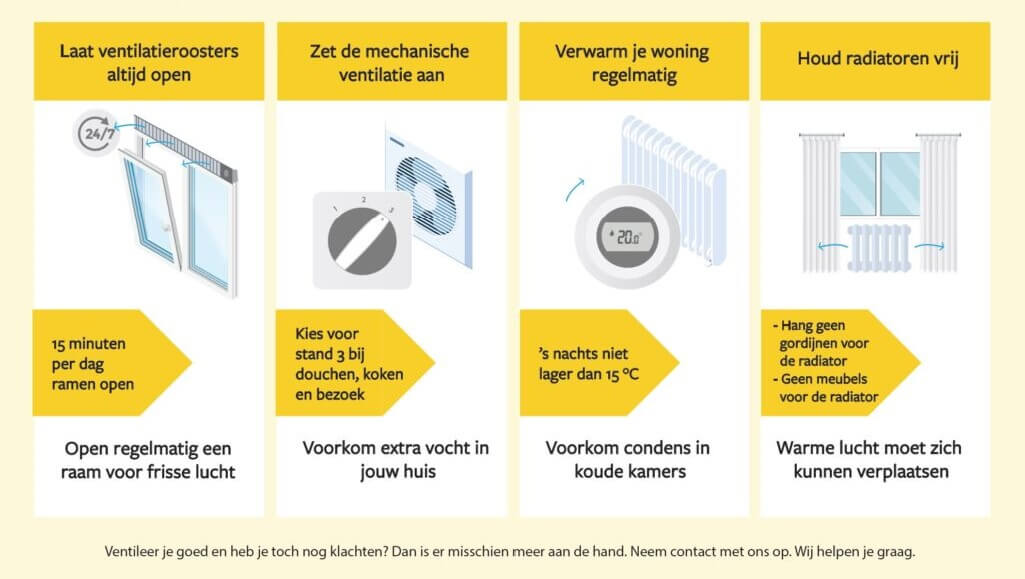
    There is no such thing as the best room temperature for your health, but there are a few things you can look out for. With a temperature between 19 and 21 degrees,
    you are usually fine. Too warm is not healthy, but neither is too cold. Below 18 degrees the chance of moisture and therefore mold and bacteria increases. Yet
    not every room needs to be equally warm. For example, the bedroom can be a lot colder than the living room. With the help of a
    smart thermostat you can set this per room.
  • Tip 3: Open windows and vents
    When you are not at home, it is obviously not wise to leave the windows open. Fortunately, there are grilles for that. Place these grilles regularly in each room
    open, so that your home is continuously supplied with fresh air. Even in winter! If you are at home, it is important to open as many windows as possible during the day
    a crack. Do you want to save as much energy as possible? Then it is smart to place a meter in your home that can measure the air quality such as humidity, temperature and CO2. That way you can open the vents and windows when the air quality falls below a certain level
    level comes.
  • Tip 4: Provide extra ventilation when showering or cooking
    Are you going to cook, shower or go to bed? Then ventilate extra. You can do this while cooking by turning on the extractor hood and while showering
    ventilation system to the highest setting. If you do not have a mechanical ventilation system, open the windows wide. Ventilate your bedroom
    by cracking your window or at least leaving the vents open. It may be cold, but it’s for a good cause: fresh air helps you sleep better.
  • Tip 5: Clean the grilles
    Chances are your ventilation grilles could use a cleaning. To provide yourself and your home with clean air continuously, it is important
    important that the grids through which this must pass are also clean. Clean them preferably twice a year. A soapy solution with soda works wonders.